General Information about Bukhara
City name, international abbreviation: Bukhara, UZB, BKH
Settled: 5th century BC (over 2,500 years of continuous history)
Type: Regional Capital / Historic City Administration
Area: ~143 km² (55 sq mi)
Population: ~300,000
Time zone: UTC +5
Area code: 65
Average temperature/year: 15.8 °C (60.4 °F)
Main UNESCO World Heritage Site: Historic Centre of Bukhara (Inscribed in 1993)
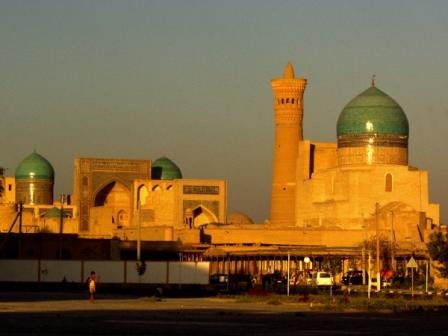 "Bukhara-and-sharif" - "noble and sacred" - is one of the numerous epithets that were awarded to this ancient city. The great poets of the East of the IX-X centuries, Rudaki Dakiki, Firdousi, devoted kasids to it. In the 10th century, "The History of Bukhara" was written by Abu Bakr Muhammad ibn Jafar Narshakhi. The first period of Bukhara was reflected in the national epic and numerous legends. The Great Silk Road connected China with Iran, India, and Europe, and passed through Bukhara, which is one of the few cities in the world that has been continuously developing in the same place for thousands of years. It remains one of the few cities in the world that has continuously evolved on the same ground for over 2,500 years. In 1993, UNESCO recognized the Historic Centre of Bukhara as a World Heritage site. Today, iconic landmarks like the Po-i-Kalyan complex, the Ark Fortress, and the Labi-Hauz ensemble offer travelers a living museum of Central Asian architectural perfection.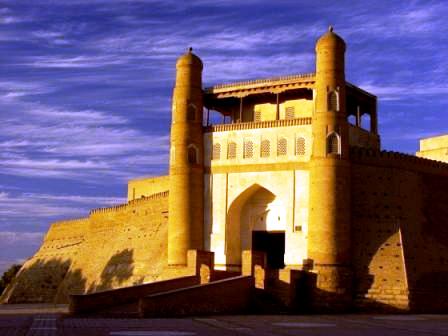
The most part of Bukhara's center is an architectural area, the main part of which is occupied by former madrassas. Now, Emir Castle Arch (X-XIX centuries) has become a museum. The arch is located opposite the Mosque Bolo-House – the Emir’s official place of prayer, built in 1718. One can come to a small area with a complex Poyikalon through the narrow side streets along the Arch. Poi Kalan consists of Kalan Mosque (XVI c.) - one of the majestic buildings of Central Asia, accommodating up to 10 thousand people: Mir-Arab madrassah - an active Islamic seminary and the Kalan minaret - 45.6 meters tower, which can be seen from almost any part of the old city. The madrassah is around 500 years old.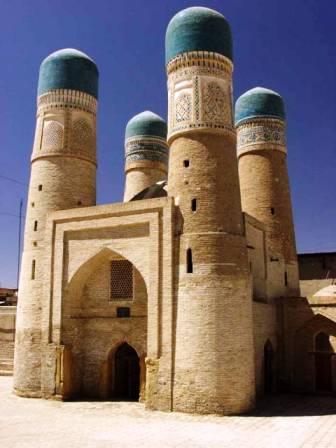 In the center of the old town, there is an ensemble of Labi Hauz with its elegant buildings around a small pool surrounded by mulberry trees. Street traders, old men playing chess and drinking tea, settled here. In the eastern part of town, you can see the madrassah Nadir Divan Begi. It was built as a caravanserai, but Khan recognized the madrassah in it, and reformed it around 1630.
Trade domes of the XV-XVI centuries: Toki-Sarrafon (dome of moneychangers), Toki-Telpak -Furushon (dome of head-dress sellers), Toki-Zargaron (dome of jewelers) point to the fact that Bukhara in the past was at the crossroads of caravan routes.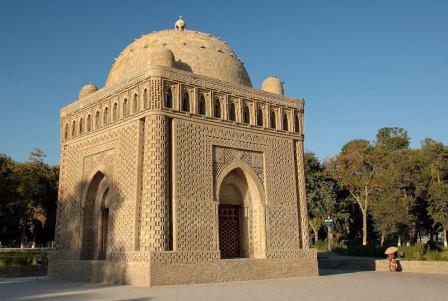
Sitorai Mokhi Khosa is located on the road to Samarkand, in the suburbs of Bukhara, three kilometers from the city center. It is the summer residence of the last emir, known as the palace of "Stars like the Moon" (or "Moon and Stars"). Today, it operates as a museum.
The Bahauddin Naqshband ensemble is located about 12 kilometers from Bukhara. This complex served as the main sacred pilgrimage site of Bukhara. Bahauddin Naqshband is one of the founders of the Sufi order in Islam.
Bukhara cuisine
Bukhara's gastronomic landscape is as rich and diverse as its historical monuments. Here, ancient urban culture and local culinary traditions are harmoniously blended.
Guests of ‘Anur Tour’ in Bukhara usually prefer to try the legendary Osh-i-Sofi plov, which is cooked in copper cauldrons by layering and steaming the ingredients, as well as the famous Gijduvan shashlik and hot Bukharan flatbreads fresh from the tandoor.
So here, we list all the must-try dishes from Bukhara cuisine:
Osh-i-Sofi (Bukharan Plov): A light and highly aromatic style of plov cooked in copper cauldrons, where the rice and meat are boiled separately before being layered and steamed.
Gijduvan Shashlik: The famous minced and skewered meat kebabs, known for being incredibly tender, juicy, and flavorful.
Qurutob (Qurutoba): A traditional Tajik dish that is widely popular in Bukhara and has recently gained immense popularity in Tashkent. Prepared by combining crushed qurut (dried yogurt balls), flaky patir bread, clarified oil (or flaxseed oil), meat, fresh tomatoes, cucumbers, and herbs, it is a savory, refreshing dish particularly favored during warm days.
Qayish: Dough-based dishes are widely consumed in Bukhara, which is why you will find a variety of them on restaurant menus. For instance, Qayish—which is similar to shilpildoq and beshbarmak but differs in its minced meat or rich topping—has won the hearts of Bukharans with its filling and delicious taste.
The city has plenty of famous dishes for tourists to try, as well as great places where they are prepared.
Most of Uzbek cuisine is heavy and requires a short rest after lunch.