Country name, international abbreviation: Uzbekistan, UZ, UZB
Settled: ~8th century BC (as Nakhshab/Nasaf; UNESCO celebrated its 2,700th anniversary)
Type: City Administration (Capital city of Qashqadaryo Region)
Area: ~76 km² (29 sq mi)
Population: ~278,300
Time zone: UTC +5
Area code: 75
Average temperature/year: 16.7°C (62.1°F)
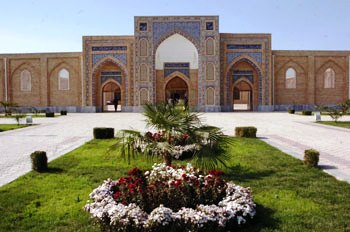 Karshi is a city in southern Uzbekistan. It is the capital of Kashkadarya Province and has a population of more than 300000. Karshi city is located in the Kashkadarya River basin in the heart of the Kashkadarya oasis, in the eastern part of the Karshi steppe. It is located at the foot of Kungurtau, on the western edge of the Pamir-Alai mountain system.
Karshi is one of the oldest settlements on the territory of Uzbekistan.
On October 27, 2006, the country celebrated the 2700th anniversary of Karshi city.
The main places of interest are: the ancient settlement of Erkurgan, Kok-Gumbez mosques (end of the XVI century), Bekmir (XVI), Kilichboy, Khodja Kurban, Magzon, and Charmgar (XIX—XX), Khodja Abdul Aziz madrassah. Today it is the Regional Museum, the largest museum in the city.
History of Karshi
According to archaeological findings, the earliest settlement in the area of Karshi dates back to the 7th century BC. During this period, the first defensive wall was built around the settlement, and its remains can still be seen today. In ancient times, the settlement was known as Navtak, a name that means “new building” in the Sogdian language.
Situated along the Great Silk Road, the city held an important strategic position and attracted the attention of many conquerors. It also lay on a route connecting Samarkand and Bukhara with India, making it a significant center for trade and travel.
Between the 9th and 14th centuries, the city was known as Nakhshab. In 1346, by order of Amir Temur, a fortified palace was built there, and the city acquired its present name, Karshi. The name is derived from a Turkic word meaning “fortification.” From that time onward, the city continued to develop and prosper.
Karshi reached the height of its development during the rule of the Shaybanid dynasty. By the 18th century, it had become the second-largest city in the Bukhara Khanate.
Karshi cuisine
When visiting Uzbekistan, be sure to explore the traditional cuisine of the Kashkadarya region. One of its most famous specialties is lamb tandoor-gosht, seasoned with zira (cumin) and slowly cooked in a tandoor using recipes passed down through generations. Another local favorite is samsa, a delicious pastry whose irresistible aroma is especially wonderful when freshly taken out of the tandoor. It is often served with a spicy tomato sauce. Kashkadarya also offers a variety of other traditional dishes, including regional pilaf, chuchvara (small dumplings), and nohot shurpa, a hearty soup made with chickpeas. In addition, the region is known for chalop, a refreshing traditional drink prepared from sour milk.